
Introducing CenterTest Data Studio
Business and test analysts manage the data behind CenterTest's data-driven tests themselves, in a familiar grid, without waiting for an engineer.
Business and test analysts manage the data behind CenterTest's data-driven tests themselves, in a familiar grid, without waiting for an engineer.
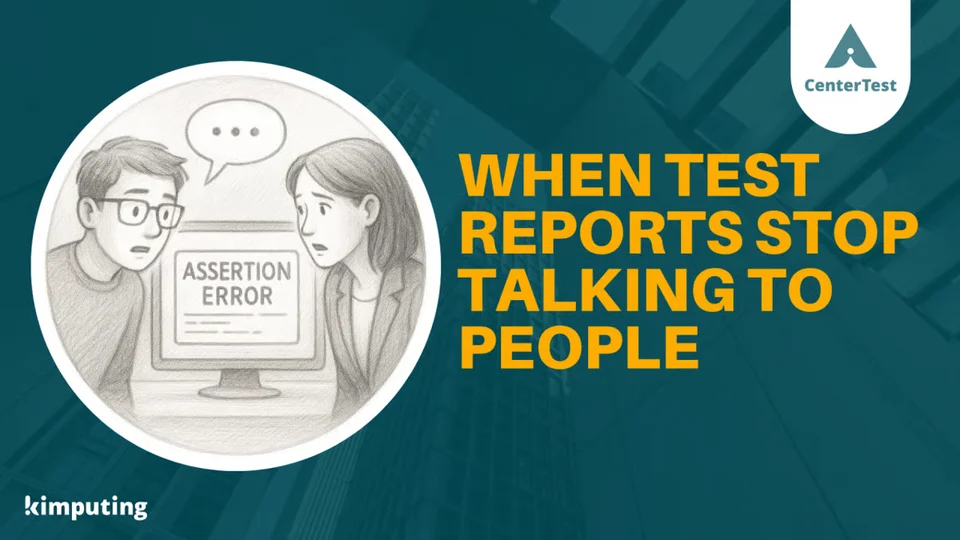
"Our test suite passed," the developer announced. The business analyst looked at the console output - pages of cryptic assertions, stack traces, and technical jargon. "Great," she replied. "But what did it actually test?" The developer scrolled through the logs, searching for something human-readable. Nothing.

The thesis that "manual testing will be a cheaper and more effective method than automation" continues to appear in testing discussions, webinars, and publications. This perspective represents a widespread but oversimplified view of software quality economics. While manual testing offers lower hourly rates and immediate deployment, this perspective fails to account for the complexities of scale, the many scenarios where automation isn't merely preferable but essential, and most importantly the evolution of testing technologies.

We've all seen it happen. The developers on the team excitedly discuss the latest framework they're implementing, while the test automation engineers quietly stick to the same Selenium scripts they've been maintaining for years. It's a strange disconnect – the very people who should be at the forefront of technological validation often trail behind when it comes to evolving their own toolset.

Test code often plays second fiddle to production code. Yet, the quality of our tests directly affects the reliability and maintainability of our entire codebase. In a previous article, we explored the importance of code quality and the aspect of designing and establishing a clean, reusable architecture. Now, we turn our attention to an equally critical aspect: monitoring test code quality, especially when working with less experienced teams.

CenterTest's role-based testing accelerates InsuranceSuite development by using superuser for functional testing and then using those same tests to verify permissions - a feature missing in Guidewire’s GT framework.
Guidewire test automation,